SMALL COURTESIES, BUILT IN
A little less
to do.
The television is already the bright thing in the room. Its remote doesn’t need to be another.
Three small decisions from Sohva, our Android remote for Sony Bravia TVs. A break, a habit, an ending. Turn them over here.
Take a seatfrom Sohva’s imagery
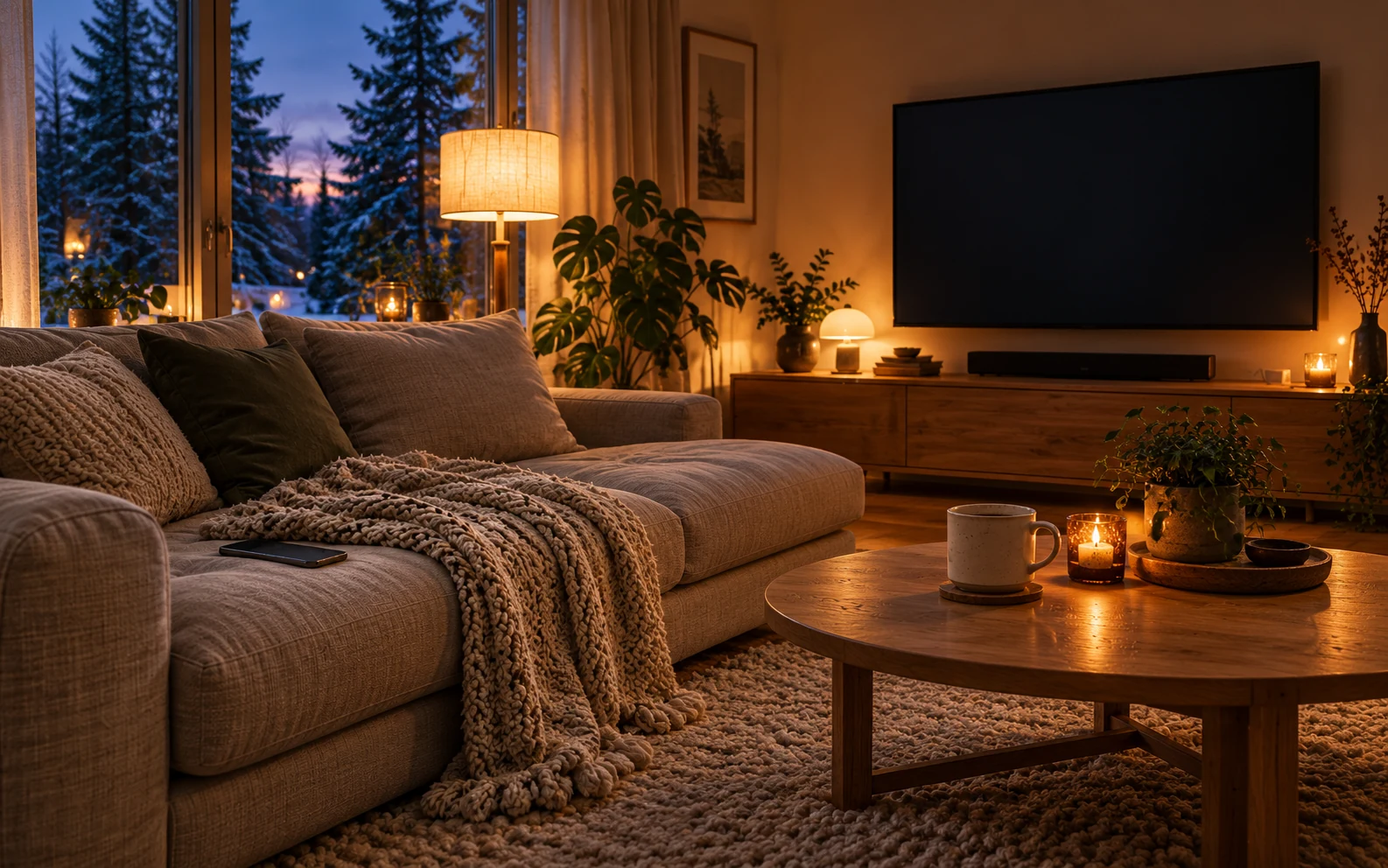
AI-rendered room based on Sohva’s landing-page imagery.
Example channels and levels. No television is connected. No sound plays.
01 / A MUTE WITH AN OWNER
A little quiet.
On whose terms?
One tap mutes an ad break for three minutes. But what if you had already made the room quiet?
No break running
02 / A HABIT, WITH A BOUNDARY
The news is on.
Or the room is empty.
A scheduled scene keeps a familiar hour. A wake-up is an express request to turn the TV on.
03 / THE LAST MINUTE
Let the evening
come down gently.
The sleep timer lowers the sound in six steps, then turns the TV off. It keeps the earlier level for another evening.
Three minutes of quiet.
A break restores a mute it made. A mute you had already chosen stays yours.
Source-informed browser sketches, simplified for one room. These controls illustrate selected decisions; they do not run the Android app, its alarms or its network protocols.
THE THING ITSELF
Made for
a thumb.
Sohva is Finnish for sofa. A name for where this belongs. The actual app is an Android remote for Sony Bravia TVs, made for the home network, without ads or an account.
01 / THE CENTRE OF GRAVITY
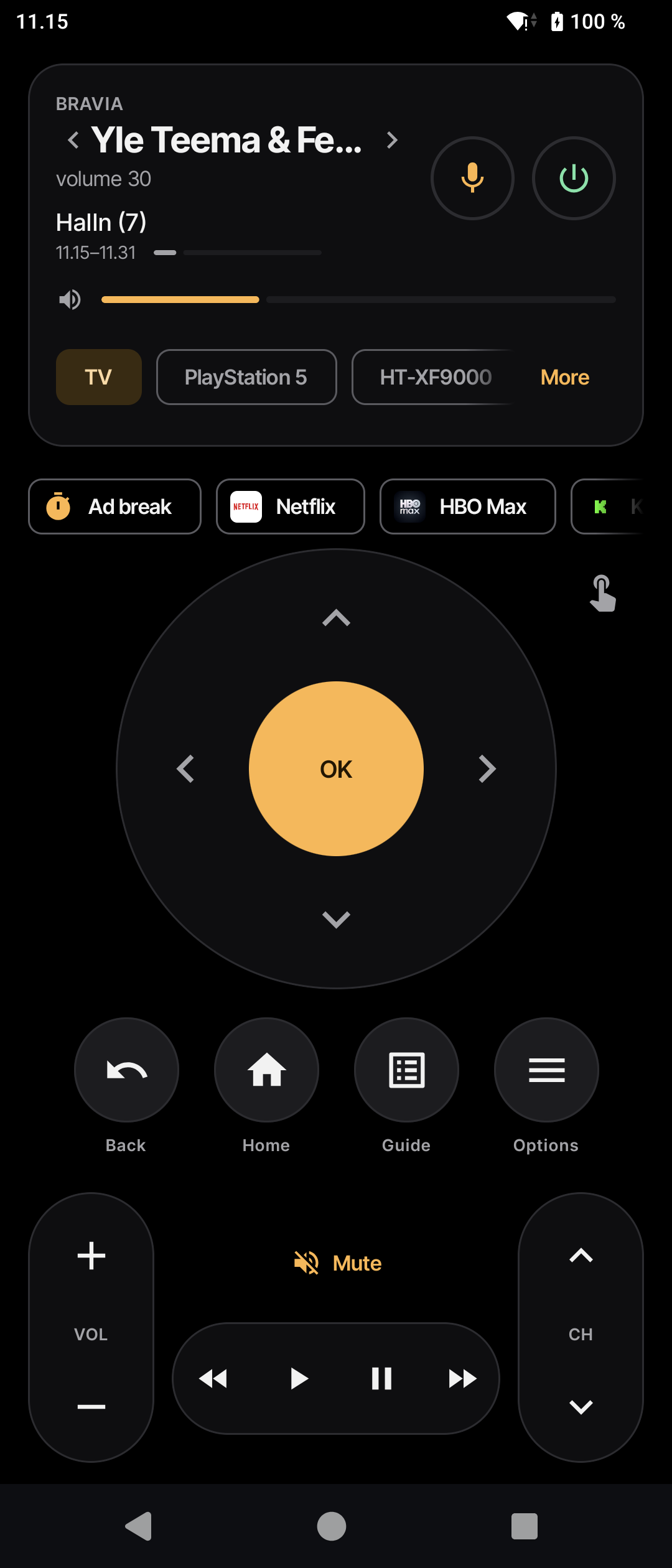
A large, warm OK.
The directional ring gives the thumb a place to return to. Volume and channel have their own rockers below it. Ordinary actions get the space.
02 / ANOTHER KIND OF REACH
The phone is already here.
Its volume buttons can control the TV. Quick Settings, a widget and an optional notification remote put familiar actions within reach without opening the app.
03 / NEAR ENOUGH
One home network.
The app talks to the TV locally. Discovery, pairing and standby still matter; “local” is a useful boundary, with practical conditions of its own.
Open the source record and the edges of this study
Read against Sohva source revision 16e47c3. The browser model is authored JavaScript, not extracted Kotlin. The room, times, channels and starting levels are illustrative.
- AdBreak: a mute with an owner. The reduction covers an existing mute, a break-owned mute and a manual unmute. The app also handles channel return, phone-call ownership, persistence and retries; this room does not.
- Scheduled scenes and wake-up. The controller’s gate skips a scheduled scene unless the TV is known to be on. Our two-state room omits unknown and unreachable states. It assumes a successful connection when applying a plan.
- The sleep fade. Six steps towards one third of the initial level, with a minimum floor of 4. The example starts at 30. Actual volume changes are read back from the TV; cancellation and restoration have further checks. The drawn sound marks are illustrative, not a loudness measurement.
The product site and README describe testing on a Sony KD-65XF9005. Wider Bravia compatibility is an expectation, not established here. Google Play release is in preparation. We have not run a living-room usability study or a new device test for this specimen. Sohva is independent, not made by or affiliated with Sony.
Voice input uses Android’s speech recognizer; its processing depends on that service. “Home network” here describes the app’s TV-control traffic. See the app’s privacy policy for that distinction.
FROM THE SAME SOFA
Leave the
evening alone.
What a remote should remember. What it should ask. And the things it ought to have the manners to leave alone.