
FIELD NOTE / 009DESIGN STUDY

NOTES ON LOOKING AND BELONGING

A place
to stand.

Turn the island. The view can change. The ground should keep its word.

Listen to this note · 5 minAI-narrated

RECORDING / 4:55

Subscribe to the podcast
Downloads
Transcript

Machine-generated from the recording; names and speaker boundaries may need checking.

0:00 Moth and Gravel, Field Note 9, A Place to Stand. An AI narrated

0:08 edition of the published note. A pony stands beside a block. Turn

0:15 the island a little and its feet disappear into the ground.

0:20 Nothing has moved except the view.

0:24 A small island asks for a particular kind of trust. The

0:29 player looks, chooses a place, and tries something there. The

0:34 picture needs to keep its account of where things are,

0:38 even as the camera wanders. The ground has to keep its word. Sky

0:44 Stack Builders renderer experiments begin with that

0:48 agreement. The game keeps a shared camera for drawing and

0:53 choosing a place. But a common view does not give every drawn

0:58 detail a dependable position within it. The broad face of a

1:02 block is one thing. A bevel, a patch of soil, and the edge of a

1:08 pony's foot each need to belong somewhere too. If their depth is

1:14 guessed badly, a small detail can cover something that ought

1:18 to be in front of it. Let the pony show through everything and

1:23 the feet return. So does a different problem. A raised

1:28 block can no longer hide the pony when it should. The useful

1:32 answer has to preserve both relationships. Feet meet the

1:37 ground. A wall can still stand in the way.

1:42 Take a little away and look again.

1:46 During an earlier investigation, one fixed camera view lost part

1:51 of the pony's body and much of its contact with the ground. A

1:56 second version left out some terrain details. All the sampled

2:01 parts of the pony returned. That comparison gave the work a place

2:06 to look. Something among the omitted details deserved closer

2:11 attention. It also left the island incomplete. The patches

2:16 and edges that make a place feel particular were part of the

2:20 picture we wanted to keep. An earlier investigation into

2:26 views. Recorded sample counts from one camera position. This

2:31 schematic is not a game capture or a statement of the renderer's

2:35 current condition. Open the full-size diagram.

2:40 Keep the small things. A patch of soil deserves an account of

2:45 where it belongs, just as the large block beneath it does. The

2:50 repair has to let both remain in the picture. There is a design

2:55 question underneath the drawing work. Which small agreements

3:00 make a strange place feel dependable? A player may never

3:04 notice a correctly hidden hoof. They notice when a turn of the

3:09 camera makes the island contradict itself. That

3:13 interruption can reach beyond the pony. Is this a place I can

3:17 build? Will the block I choose be the one I meant? Turn the

3:23 island again. The next player study would keep the whole scene

3:27 present. Turn the camera, put a raised block in front of the

3:32 pony, try a ramp. Ask someone to choose a place beside it, then

3:38 look from another side. Watch where they hesitate and what

3:42 they believe is touching the ground. A rendering test can

3:47 check sampled pixels. The person can tell us whether the place

3:52 still makes sense. The island has room for pastel weather and

3:57 improbable creatures. Its ground should be something they can

4:01 stand on. Study scope, source reading. An earlier view. This

4:08 study reads an earlier renderer investigation and its recorded

4:13 native test results. The comparison describes one

4:17 historical camera fixture and an intentionally incomplete

4:22 diagnostic. It does not describe the current renderer's test

4:27 status. The cover is editorial artwork and the comparison is a

4:32 schematic of recorded counts. No new game capture, player

4:38 observation, or performance measurement was made for this

4:42 note. The proposed player study remains to be done. You have

4:47 been listening to Moth and Gravel Field Notes. The written

4:52 edition is at mothandgravel.com.

Download transcript

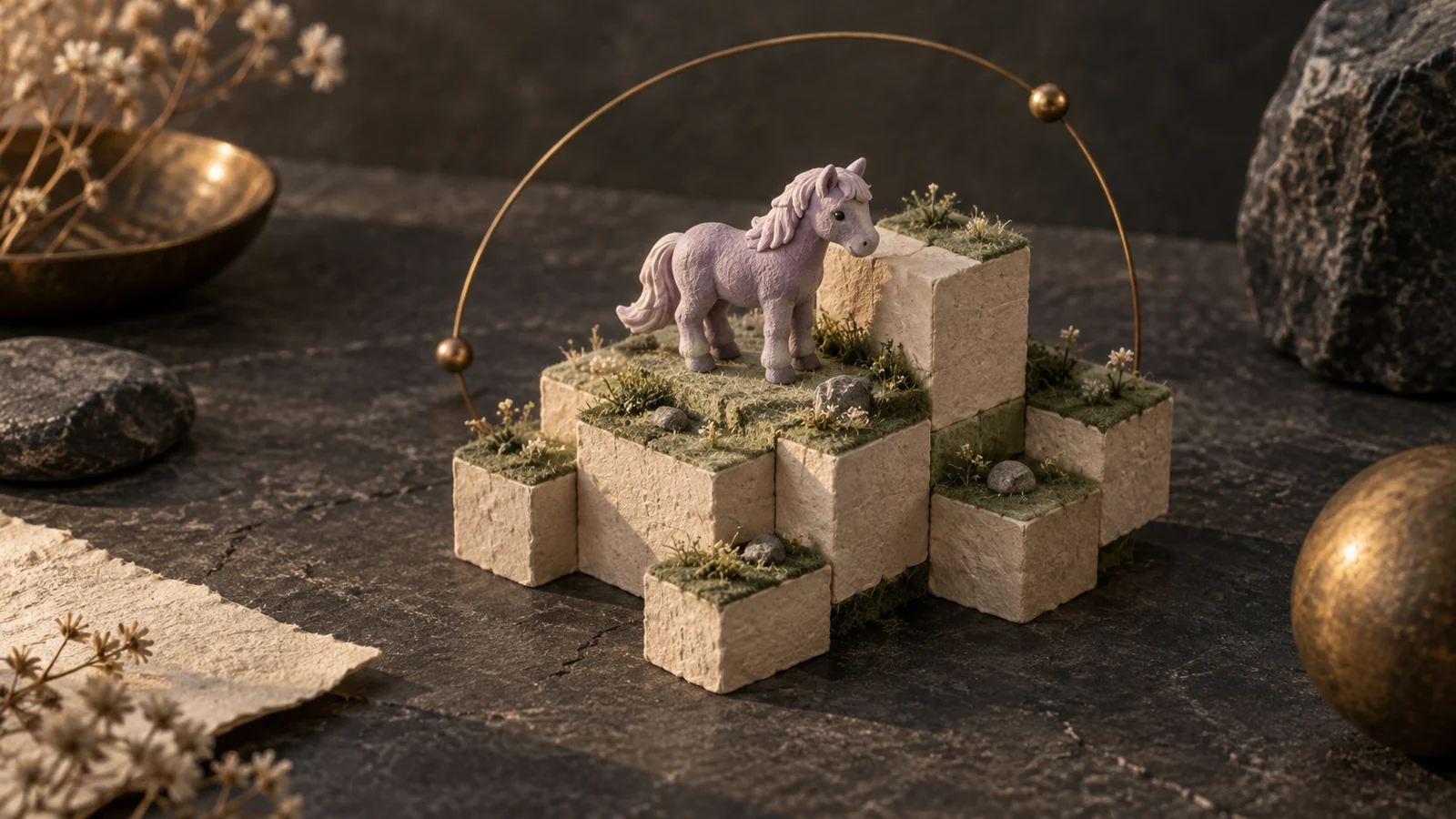
A lilac clay pony stands on a small sage-topped island of bone-coloured cubes, surrounded by a thin brass orbit arc.
A place to stand, seen from another angle. AI-generated editorial illustration, not a gameplay capture.

A pony stands beside a block. Turn the island a little and its feet disappear into the ground.

Nothing has moved except the view.

A small island asks for a particular kind of trust. The player looks, chooses a place and tries something there. The picture needs to keep its account of where things are, even as the camera wanders.

The ground has to keep its word

SkyStack Builder's renderer experiments begin with that agreement. The game keeps a shared camera for drawing and choosing a place. But a common view does not give every drawn detail a dependable position within it.

The broad face of a block is one thing. A bevel, a patch of soil and the edge of a pony's foot each need to belong somewhere too. If their depth is guessed badly, a small detail can cover something that ought to be in front of it.

Let the pony show through everything and the feet return. So does a different problem: a raised block can no longer hide the pony when it should.

The useful answer has to preserve both relationships. Feet meet the ground. A wall can still stand in the way.

Take a little away and look again

During an earlier investigation, one fixed camera view lost part of the pony's body and much of its contact with the ground. A second version left out some terrain details. All the sampled parts of the pony returned.

That comparison gave the work a place to look. Something among the omitted details deserved closer attention.

It also left the island incomplete. The patches and edges that make a place feel particular were part of the picture we wanted to keep.
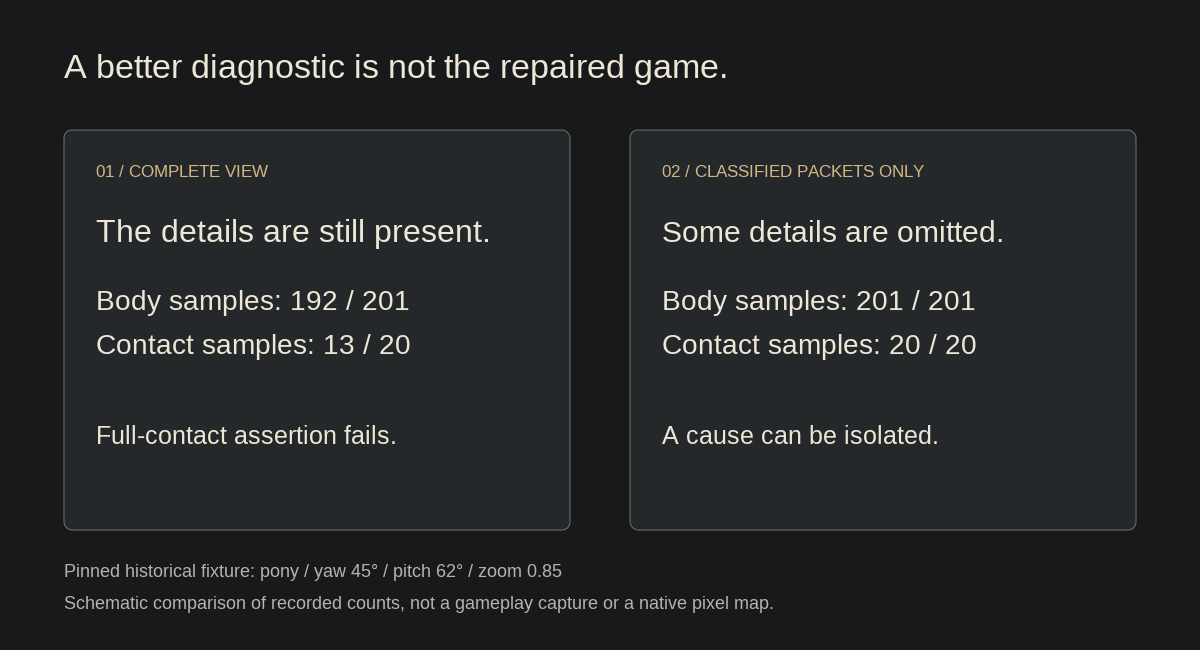
Two panels compare an earlier complete rendering with a diagnostic that omits some terrain details. The complete view retains 192 of 201 body samples and 13 of 20 contact samples; the diagnostic retains all sampled points.
An earlier investigation, in two views. Recorded sample counts from one camera position; this schematic is not a game capture or a statement of the renderer's current condition. Open the full-size diagram ↗

Keep the small things

A patch of soil deserves an account of where it belongs, just as the large block beneath it does. The repair has to let both remain in the picture.

There is a design question underneath the drawing work: which small agreements make a strange place feel dependable?

A player may never notice a correctly hidden hoof. They notice when a turn of the camera makes the island contradict itself. That interruption can reach beyond the pony. Is this a place I can build? Will the block I choose be the one I meant?

Turn the island again

The next player study would keep the whole scene present. Turn the camera. Put a raised block in front of the pony. Try a ramp. Ask someone to choose a place beside it, then look from another side.

Watch where they hesitate and what they believe is touching the ground. A rendering test can check sampled pixels. The person can tell us whether the place still makes sense.

The island has room for pastel weather and improbable creatures. Its ground should be something they can stand on.