
FIELD NOTE / 008DESIGN STUDY

NOTES ON PLAY AND REVERSAL

A whole staircase.
One undo.

Several pieces. One intended gesture. A way back that fits the thing you just tried.

Listen to this note · 6 minAI-narrated

RECORDING / 5:11

Subscribe to the podcast
Downloads
Transcript

Machine-generated from the recording; names and speaker boundaries may need checking.

0:00 Moth and Gravel, Field Note 8. A whole staircase, one undo, an AI

0:07 narrated edition of the published note. The thing you

0:11 just tried, you meant to build a little way across the island,

0:15 three pieces perhaps, a run of ramps, something the pony could

0:20 try. You place it, look again, and change your mind. How many

0:25 times should you have to undo? The machine can count the

0:29 pieces. The player has a different unit, the thing they

0:33 just tried. That is the small design question inside Sky Stack

0:39 Builders stamp tools. This rough Windows prototype lets a player

0:44 work with single blocks, a small platform, a line, or a

0:48 three-cell run labeled stairs. The run follows the selected

0:53 shape and direction. It does not solve a whole staircase for you.

0:58 The exist- -ing ground still matters. The interesting part is

1:03 where the gesture begins and ends. Before the click, a stamp

1:08 needs a footprint you can inspect. Every proposed cell

1:12 belongs to the preview. If one part would leave the island,

1:16 meet an occupied cell, hit the height limit, or cost more

1:20 material than you have, the whole proposal must remain a

1:24 proposal. Without that boundary, a click can leave two placed

1:29 pieces and one unexplained gap. The player has to discover what

1:34 happened, count what was spent, and repair a shape they never

1:39 asked to build. The source validates the complete footprint

1:44 before spending or placement. It also includes rollback paths for

1:49 spending and placement failures. That is the machinery behind a

1:53 simple expectation. Either this little thing fits, or it stays

1:59 in your hand. Open the full-size contract sketch, authored

2:04 explanation, not a game screenshot. Source derived

2:08 contract sketch. The blocked example is an alternative to

2:14 successful placement, not a step that leads to it. Three cells

2:19 illustrate the east-facing ramp run. After the click, a

2:24 successful multi-cell stamp goes into history as one batch. One

2:30 undo attempts to remove that batch and refund its materials.

2:35 The source checks that every target still has the expected

2:39 block at its top before removal. If those checks fail, it reports

2:45 undo failed and keeps the history entry. It does not

2:50 promise that the world can always be wound backwards. That

2:54 limit matters. A reassuring label should not turn a changed

2:58 world into somebody else's cleanup job.

3:03 There are tradeoffs. A bounded stamp is quicker to preview and

3:07 easier to understand than a free-form blueprint editor. It

3:12 also offers fewer shapes. Grouping the gesture makes

3:16 reversal coherent, but undoing one piece within the group

3:20 remains a separate editing task. Something worth trying again.

3:25 The hypothesis is that a player will explore more freely when

3:29 the preview, material cost, and reversal all describe the same

3:34 gesture. We have not measured that with players here. A useful

3:39 next observation is small. Ask someone to place a three-cell

3:44 run, reject a blocked proposal, and undo a successful one.

3:50 Before they press undo, ask what they expect to disappear. Watch

3:55 whether the result matches the thing they believed they made.

4:01 The island can keep its weather, critters, and pastel

4:04 strangeness. Underneath it, the editor needs a dependable idea

4:10 of that thing I just did. A little room to try, a way back

4:16 that fits the gesture. Study Scope Slash Source Reading. A

4:23 gesture to question. This study reads Sky Stack Builders stamp

4:29 placement and undo implementation. The source

4:33 describes complete footprint checks, grouped placement, and

4:37 an attempted reversal with material refunds. The

4:41 illustrations are authored explanations, not game captures.

4:46 No native game session or player study was run for this note.

4:51 Source reading does not establish every failure path or

4:54 what a player expects undo to do. The proposed observation

5:00 remains the next study. You have been listening to Moth and

5:05 Gravel Field Notes. The written edition is at mothandgravel.com.

Download transcript

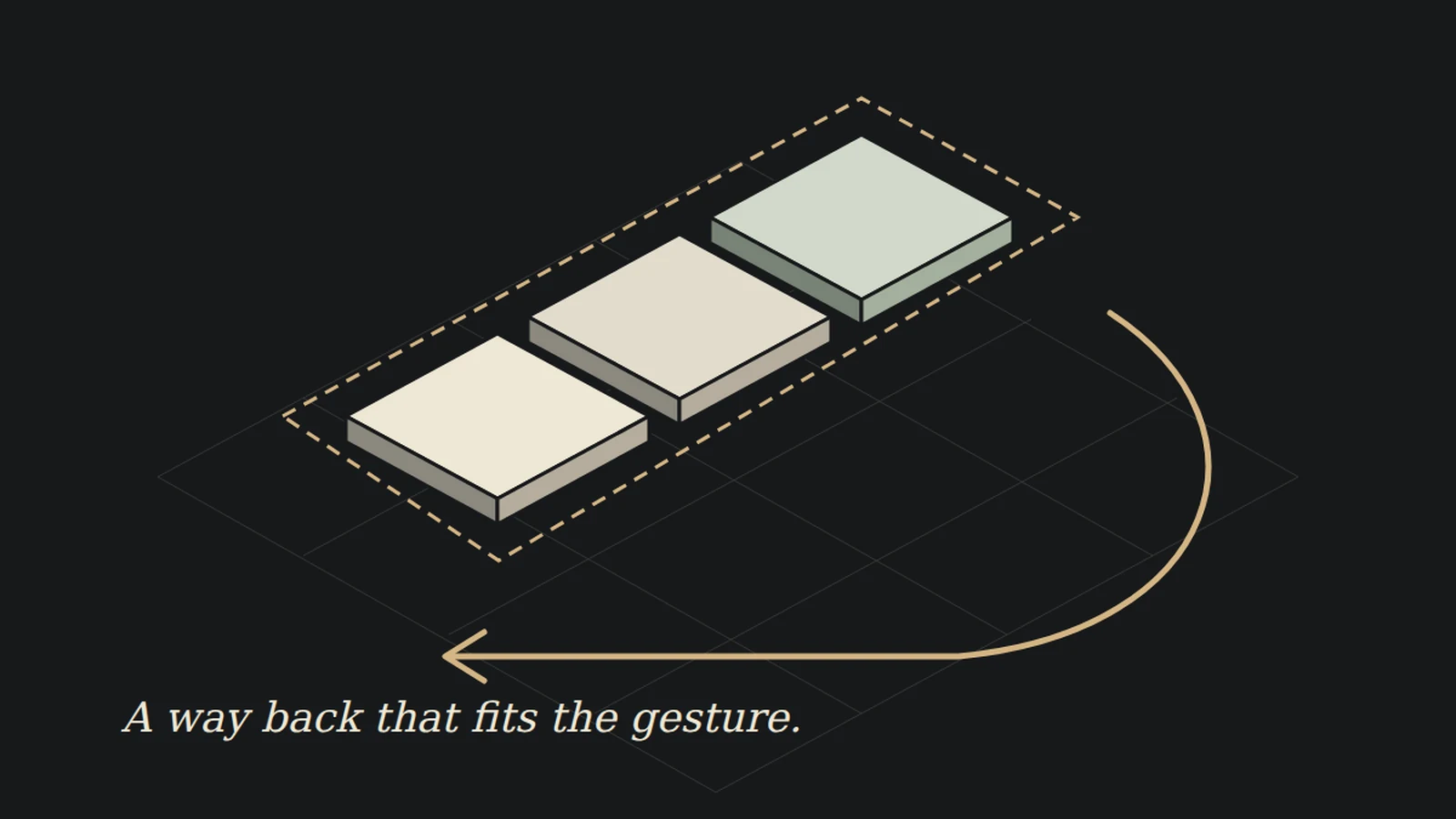
Three isometric tiles gathered inside one brass outline, with a returning arrow around the group.
An authored editorial illustration. Not a game capture.

The thing you just tried

You meant to build a little way across the island.

Three pieces, perhaps. A run of ramps. Something the pony could try. You place it, look again, and change your mind.

How many times should you have to undo?

The machine can count the pieces. The player has a different unit: the thing they just tried.

That is the small design question inside SkyStack Builder’s stamp tools. This rough Windows prototype lets a player work with single blocks, a small platform, a line, or a three-cell run labelled “Stairs.” The run follows the selected shape and direction. It does not solve a whole staircase for you; the existing ground still matters.

The interesting part is where the gesture begins and ends.

Before the click

A stamp needs a footprint you can inspect. Every proposed cell belongs to the preview. If one part would leave the island, meet an occupied cell, hit the height limit or cost more material than you have, the whole proposal must remain a proposal.

Without that boundary, a click can leave two placed pieces and one unexplained gap. The player has to discover what happened, count what was spent and repair a shape they never asked to build.

The source validates the complete footprint before spending or placement. It also includes rollback paths for spending and placement failures. That is the machinery behind a simple expectation: either this little thing fits, or it stays in your hand.
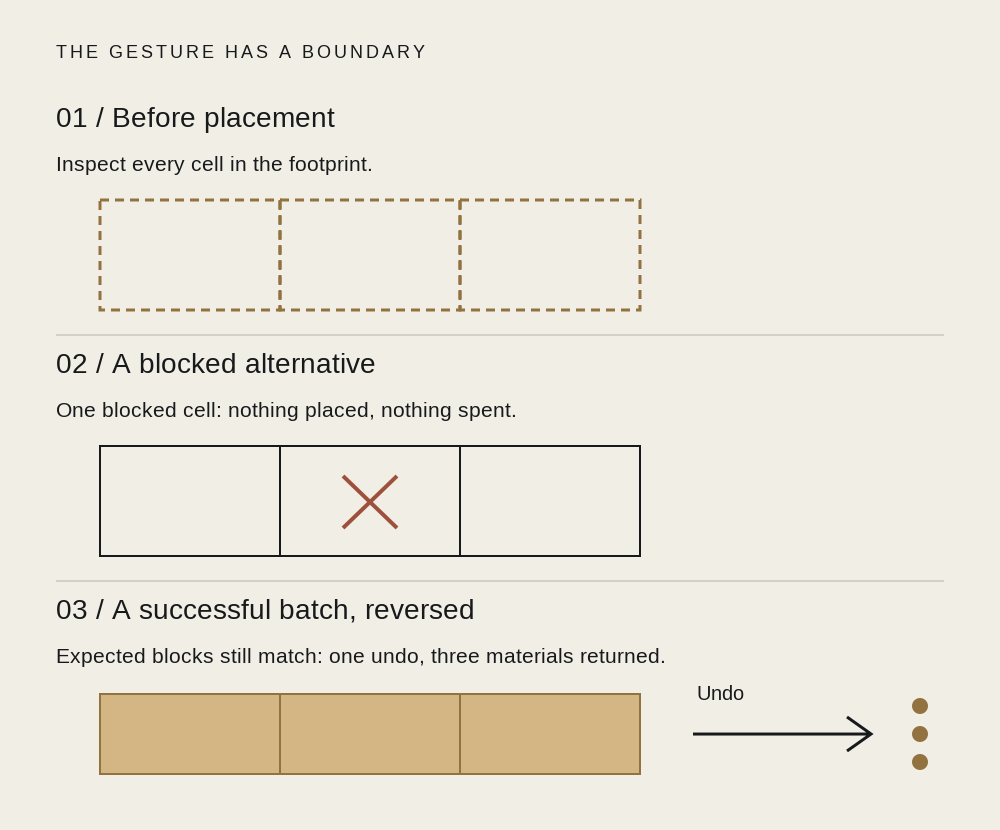
Three separate examples: inspect the footprint, refuse a blocked placement, and reverse a successful batch.
Open the full-size contract sketch. Authored explanation, not a game screenshot.

Source-derived contract sketch. The blocked example is an alternative to successful placement, not a step that leads to it. Three cells illustrate the east-facing ramp run.

After the click

A successful multi-cell stamp goes into history as one batch. One undo attempts to remove that batch and refund its materials.

The source checks that every target still has the expected block at its top before removal. If those checks fail, it reports “Undo failed” and keeps the history entry. It does not promise that the world can always be wound backwards.

That limit matters. A reassuring label should not turn a changed world into somebody else’s cleanup job.

There are tradeoffs. A bounded stamp is quicker to preview and easier to understand than a freeform blueprint editor. It also offers fewer shapes. Grouping the gesture makes reversal coherent, but undoing one piece within the group remains a separate editing task.

Something worth trying again

The hypothesis is that a player will explore more freely when the preview, material cost and reversal all describe the same gesture. We have not measured that with players here.

A useful next observation is small: ask someone to place a three-cell run, reject a blocked proposal and undo a successful one. Before they press Undo, ask what they expect to disappear. Watch whether the result matches the thing they believed they made.

The island can keep its weather, critters and pastel strangeness. Underneath it, the editor needs a dependable idea of “that thing I just did.”

A little room to try. A way back that fits the gesture.