
A ROOM, THROUGH SEVERAL EYES
Where are we,
according to whom?
A little robot explores a cardboard arena. The room is small. The questions are not.
A camera view, a collection of points and a grid each give the experiment a different shape. The useful part is being able to ask one picture a question with another.
Inspect the views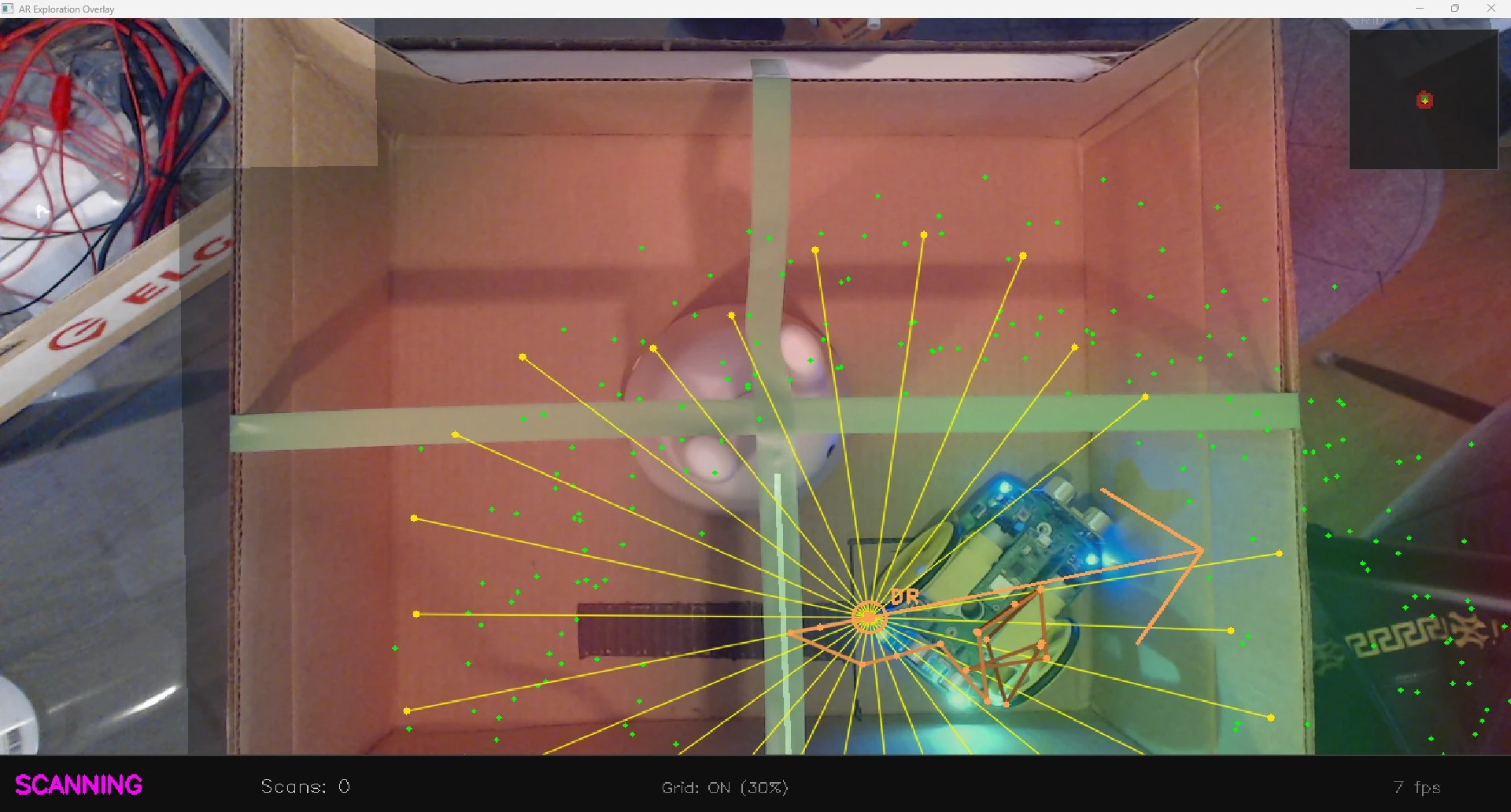
Open the original overlay capture ↗
- 01 / THE CAMERA
A place to look.
The physical setting gives the drawing something to be questioned against. A projection still depends on its calibration.
- 02 / THE POINTS
A history of readings.
The viewer accumulates points in a world frame. A reported position helps put them there; its estimate travels into the picture.
- 03 / THE GRID
A different account.
A grid classifies space. “Local” and “onboard” describe different sources, even when they occupy the same corner of the interface.
ONE DECISION / KEEP THE SOURCE BESIDE THE PICTURE
Look closer before trusting the shape.
Choose the world map, current scan or occupancy grid. The controls change the framing of the original screenshot. They do not redraw readings or replay the robot.
These are different captures, not a synchronized comparison or a before-and-after result. Their own labels, scales and counts stay with them.
The colours have different jobs. In the inspected viewer, world-point colours encode confidence. The grid uses blue for lower occupancy values, grey around the neutral value and red for higher occupancy values. A green point is not the grid’s free-space label.
CAPTURE / LOCAL
A grid built here.
The capture is labelled COVER_DRIVE. Its lower-right panel says “Occupancy Grid (local)”.
Full COVER_DRIVE capture. The world map, current scan and local occupancy grid share this screenshot.
Open the full-resolution capture ↗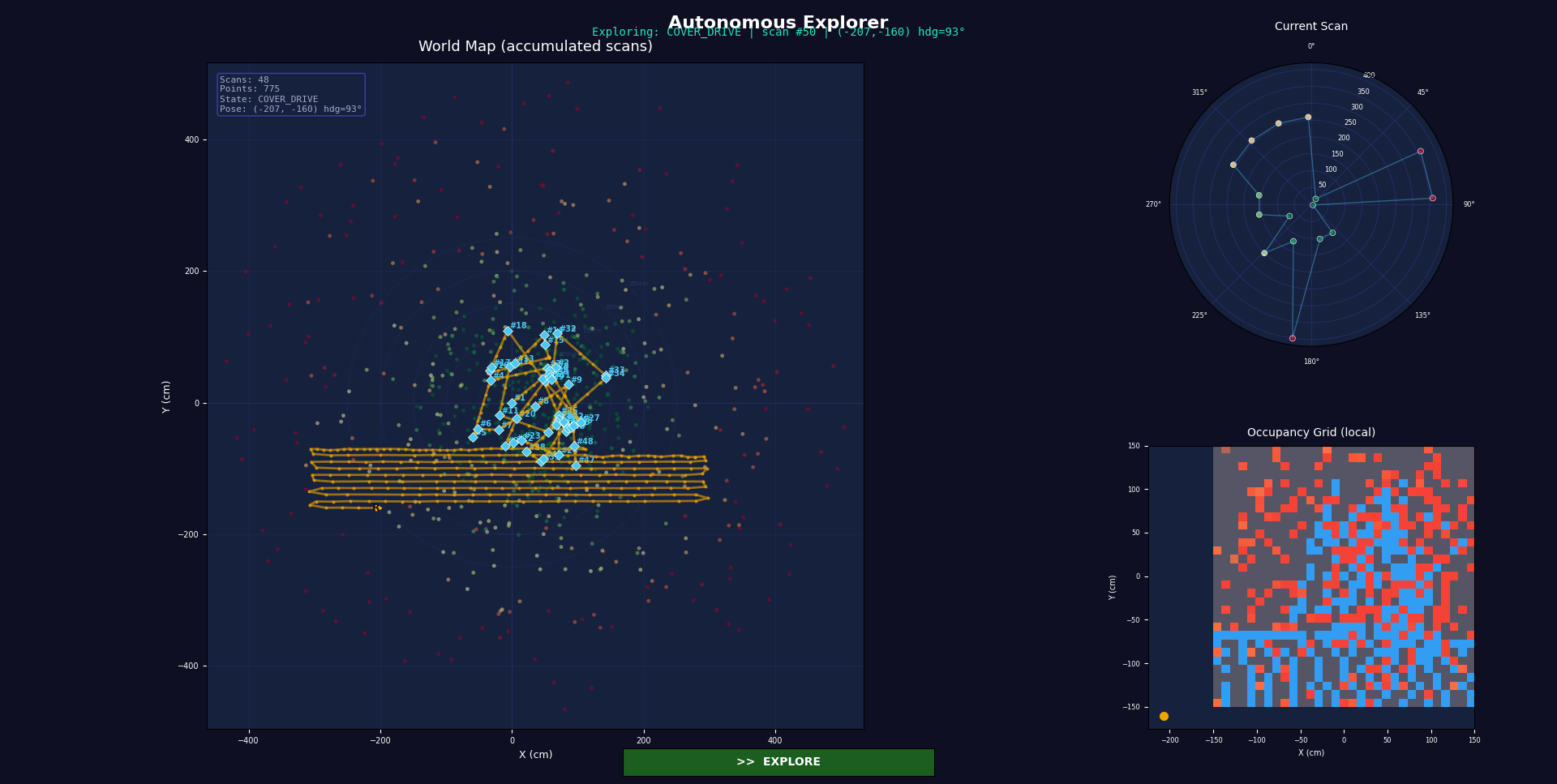
CAPTURE / ONBOARD
A grid received from there.
The capture is labelled DRIVING. Its lower-right panel says “Occupancy Grid (onboard)”.
Full DRIVING capture. It is a separate capture, not the next frame of the local-grid example.
Open the full-resolution capture ↗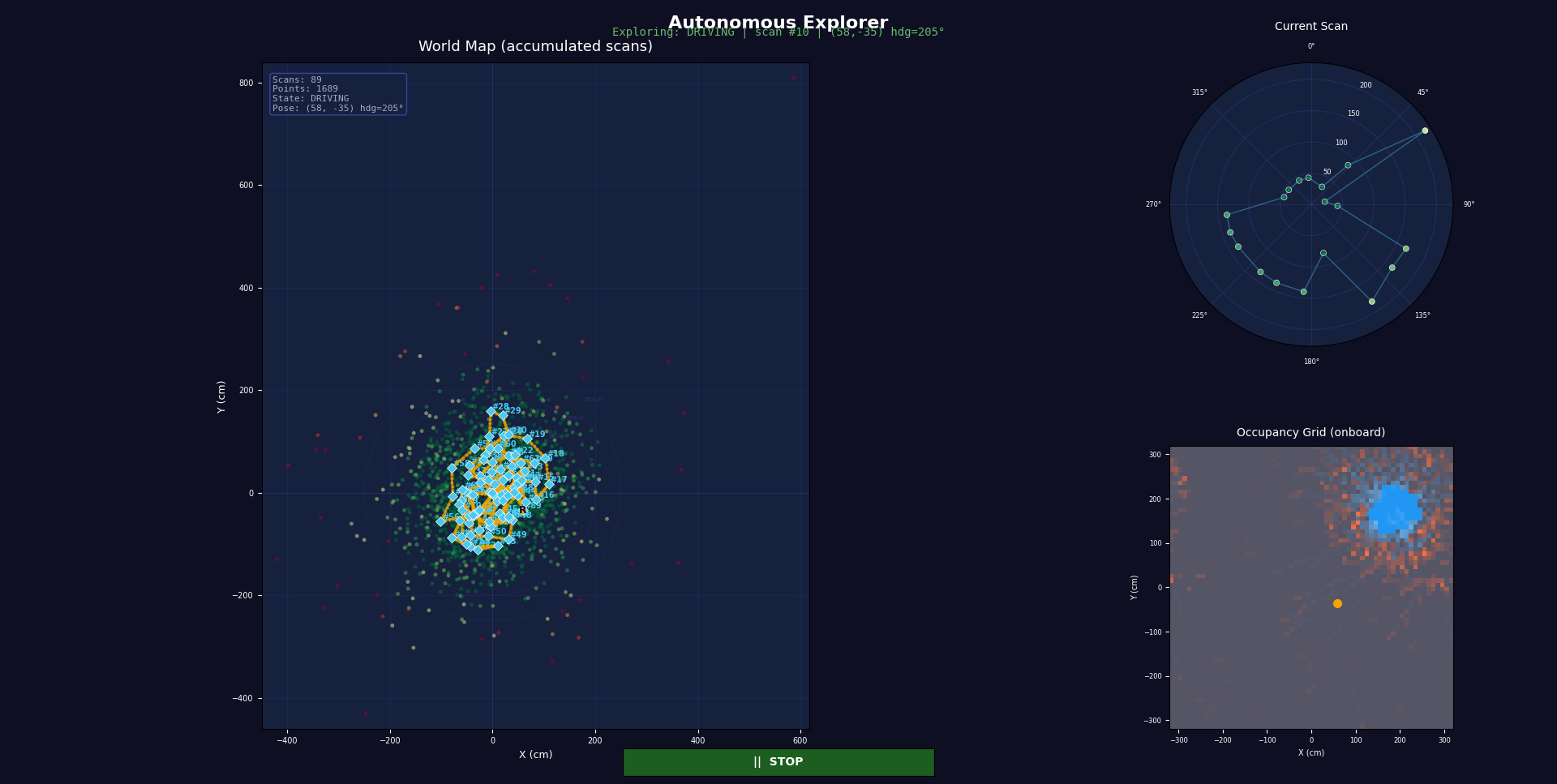
Open the working record
Three captures were supplied to the studio on 14 October 2026. That is the received date; their capture times and executable revisions are not established. The camera uses responsive WebP previews for display; its linked original JPEG is unchanged. The two maps use lossless WebP with the original dimensions and decoded pixels.
The inspected viewer source first attempts to decode an onboard occupancy grid. When that data is unavailable and accumulated points exist, it builds a local grid and changes the panel title. The screenshots show those two titles; they do not establish why a particular run used one source.
The camera overlay source uses coordinate calibration to place marks over the image. The supplied capture does not establish the calibration’s accuracy, a measured localization error or a safe navigation result.
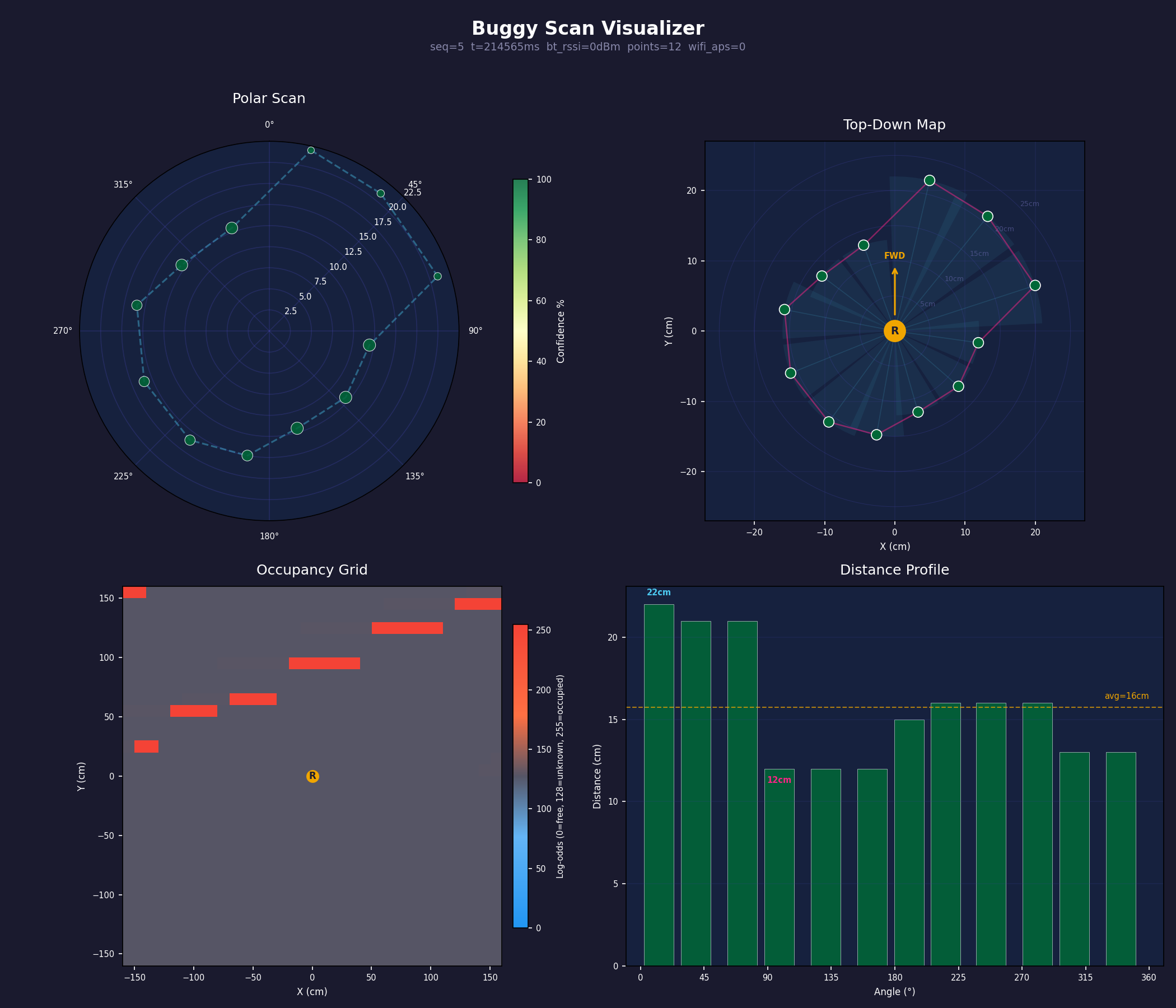
The earlier twelve-reading repository replay remains a separate specimen. Inspect the older offline replay ↗
THE NEXT OBSERVATION
Let one view
question another.
The design decision is modest: keep each view’s source visible, and make its detail reachable. A familiar arrangement should not make two different kinds of evidence look interchangeable.
For the next trial, ask someone where they would look to find an unobserved part of the room. Then ask which position they trust, and what would change their mind.
A useful next recording would preserve matched camera, pose and grid data from one run, with the calibration and timestamps beside them. These still images give us a question to test; they do not settle it.